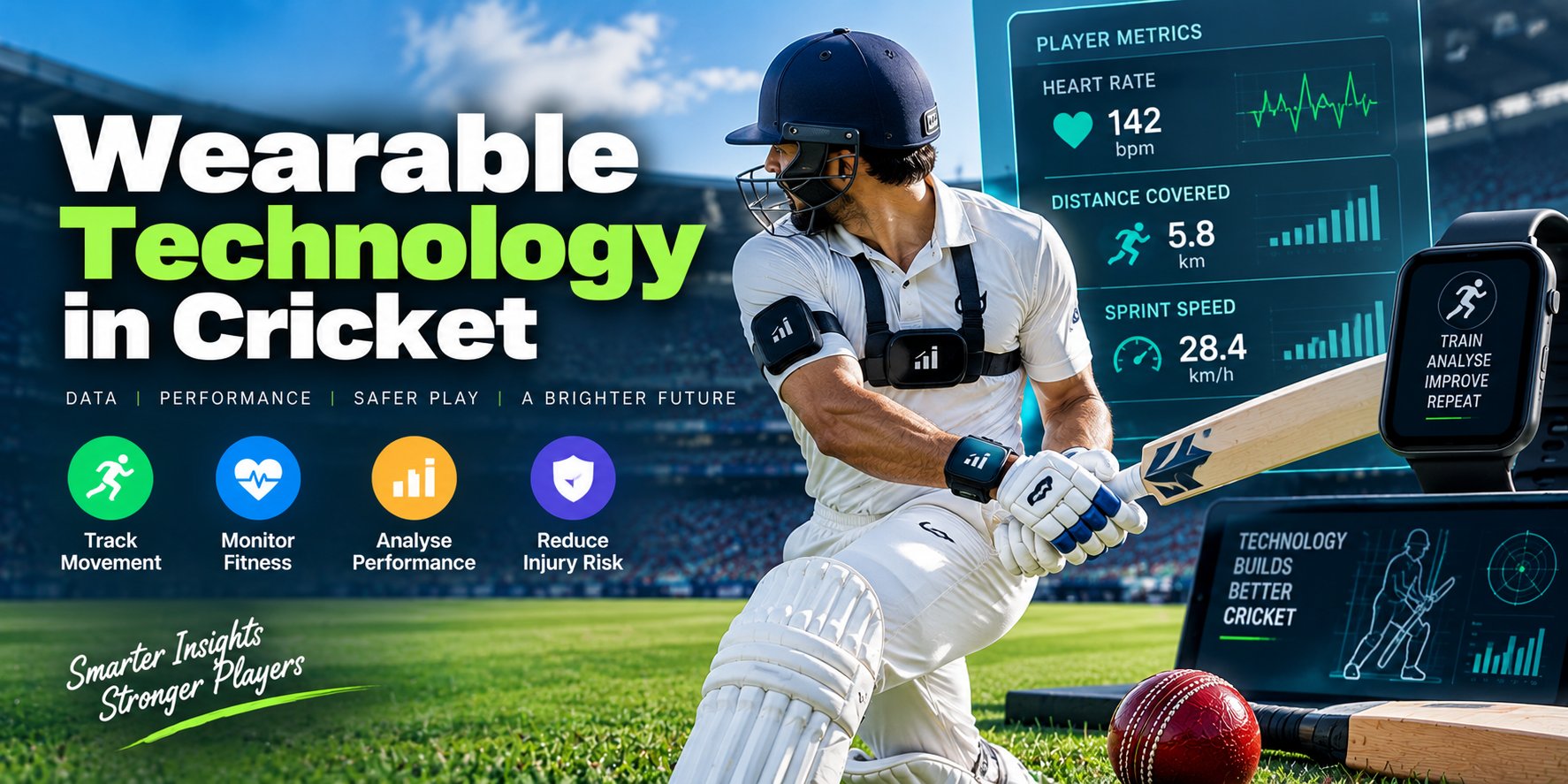
Technology has become an important part of modern cricket, influencing everything from match analysis to player fitness. Among the most interesting developments is cricket wearable technology, which allows teams to collect information about player movement, workload, and physical performance.
Wearable devices are helping coaches and support staff understand how players perform during training and matches. They can also contribute to more personalised preparation and performance management.
Here are some important ways wearable technology is being used in cricket.
1. Tracking Player Movement
One of the main applications of cricket wearable technology is monitoring player movement. Devices can collect information about how much a player runs, changes direction, accelerates, and moves around the field.
This is particularly useful for fielders who may cover significant distances during a match. By examining movement data, coaching staff can better understand the physical demands placed on individual players.
The information can also help teams design training sessions that reflect actual match requirements.
2. Monitoring Training Workloads
Cricket involves different physical demands depending on a player's role. Fast bowlers, for example, repeatedly perform high-intensity movements, while batters and fielders have different workload patterns.
Wearable devices can help record training activity and provide a clearer picture of overall workload. Coaches can compare training sessions and make adjustments when necessary.
This approach can make preparation more structured rather than relying entirely on observation.
3. Understanding Bowling Performance
Fast bowling places significant physical demands on players. Wearable technology can provide information related to movement, speed, acceleration, and other performance indicators.
Combined with traditional sports technology, these measurements can help coaches understand how a bowler moves during their delivery action.
The goal is not simply to collect more data. Useful information needs to be interpreted correctly and connected with coaching decisions.
4. Improving Fielding Analysis
Fielding is another area where player tracking can be valuable. Teams can examine how quickly players move toward the ball, how efficiently they cover space, and how they position themselves during different situations.
This information can complement video analysis. A coach can combine visual footage with movement data to understand why a player reached a particular position quickly or slowly.
Over time, such analysis can help teams develop more effective fielding strategies.
5. Supporting Personalised Training
Not every player has the same physical requirements. A fast bowler, wicketkeeper, all-rounder, and specialist batter may need very different training programmes.
Wearable devices can provide individual performance information that coaches can use when planning sessions. Instead of applying exactly the same workload to every player, teams can make training more specific to individual roles and requirements.
This is one of the major advantages of modern sports technology.
6. Combining Data with Coaching
Wearables do not replace coaches or experienced cricket professionals. Instead, they provide additional information that can support decision-making.
A number on a screen does not explain everything that happens on a cricket field. Coaches need to consider technique, conditions, match situations, player feedback, and many other factors alongside wearable data.
The best results come when technology and human expertise work together.
7. The Future of Wearable Technology
As cricket wearable technology develops, devices may become smaller, more accurate, and capable of collecting a wider range of information.
Future systems could provide teams with increasingly detailed insights into movement and performance. Advances in player tracking may also improve how coaches analyse field positioning and match workloads.
However, privacy and responsible data management will remain important considerations as more player information is collected.
Conclusion
Cricket wearable technology is changing the way professional teams understand player performance. From player tracking and workload monitoring to bowling analysis and personalised training, wearable devices can provide information that was previously difficult to measure.
Technology alone cannot improve a cricketer's performance. It is the combination of reliable data, skilled coaching, and player experience that makes these tools valuable.
Fairplay is also part of the broader digital cricket environment, where fans can stay connected with matches and cricket-related content.
